
If you saved a Word file of prompts back in 2025, you're not alone. Giving the AI a role and the context, then telling it how you'd like it to proceed was normal practice. Without a good prompt, AI either gave you junk or it required a long conversation to get the basic outputs you wanted. A prompt library is still a good place for a beginner to start.
But, if you use the same prompts you did in 2025, you'll be limiting the newer AI models and may end up getting inferior outputs.
Key facts
- About two thirds (66 per cent) of Australian lower secondary teachers used AI in their work in the past year, the fourth highest in the OECD, where the average was 36 per cent (TALIS 2024, reported in The Conversation, October 2025).
- Interviews with 57 teachers across eight schools in Australia and Sweden found "large amounts of work" going into "reviewing, repairing and sometimes completely reworking AI-produced outputs" (Selwyn, Ljungqvist and Sonesson, 2025).
- The same authors say that work reflects the limits of the tools, not a lack of skill in prompting (Selwyn, Ljungqvist and Sonesson, 2025).
- In 13,071 educator conversations with one AI platform, instructional practice came up in 80 per cent and planning in 64 per cent. Some conversations ran past 500 messages (Liu et al., 2025).
- Anthropic's prompting advice, November 2025: the best prompt "achieves your goals reliably with the minimum necessary structure".
- Ethan Mollick, January 2026: the skills that matter are explaining what you need, giving effective feedback and designing ways of evaluating work.
Why did prompt libraries work in 2025?
When I learned best practices for using AI in 2024 and 2025, prompting was key. Give it a role. Give it context. Give it the steps, and be clear about what the output should look like.
I went to conferences where presenters handed out prompts on paper. AI leaders in schools were building systems so that teachers across a school could create, save and reuse prompts for the common tasks. Microsoft called some of those saved prompts "agents". They sat on the left sidebar of Copilot, but were little more than saved prompts that allowed you to add a few attachments. I built a few of those. I ambitiously thought it best to set up a OneNote system or create and save documents for the prompts that worked best.
What changed in 2026?
In November 2025 Anthropic published its prompting guidance for 2026. The best prompt, it says, is the one that "achieves your goals reliably with the minimum necessary structure." The same guide says "modern models are sophisticated enough that heavy-handed role prompting is often unnecessary." Its current documentation goes further: "Prefer general instructions over prescriptive steps. A prompt like 'think thoroughly' often produces better reasoning than a hand-written step-by-step plan" (Anthropic, Prompting best practices, read September 2026).
| What the 2025 advice asked for | What the 2026 advice asks for |
|---|---|
| A role: "You are an experienced Year 4 teacher" | A goal: what you want to exist at the end |
| Context, at length | Only the context the model cannot know: your class's needs, curriculum framework, learning intentions and success criteria |
| The steps, in order | What "done" looks like: length, audience, what good and bad look like |
| The output format | What it must not change: the quotes, the headings, the parts that are already right |
Why did my saved prompts stop working?
In late 2025, the AI podcasters began talking saying this: Give the AI model a goal and it will find a better, more thorough way of getting there.
I was skeptical.
But by early 2026 my own saved prompts were noticeably less effective. I think that I expected an AI model change to be like moving from Windows 10 to Windows 11. I noticed the difference, but I didn't change the way that I worked.
In contrast, changes from one AI model to another are more like hiring a new assistant. From a human's perspective, the 'personality' can feel different because it is 'thinking' in different ways.
So I had a conversation with the newer model. I framed it much as I would a human discussion: I understand that you work differently than the model I worked with last year. I worried the prompts might be too bulky now. It took a look at my files of prompts. It agreed.
My follow-up question: How can we best work together now?
The results improved.
I now have files of prompts that I'll never use again. But they were a good place to start my journey of conversing with AI. They are still a good place for beginners to start.
But if you're doing more complex work around research, policy writing, or the analysis of changes to curriculum documents, you'll want to pretend you're sitting down with an intern. Tell it what you are doing. Point it to a file of documents. Tell it what you want to know, what you need it to find, and what you'd like as the output.
Notice how AI has changed. Then notice how you change the way you work.
What has not changed?
The conversation. The critical evaluation of outputs. When the output is inaccurate or unexpected, work out how it understood you, then decide what you need to clarify.
With 2025 AI, you probably didn't say enough. In 2026, you may have said too much.
Questions people ask about prompt libraries
What is a prompt library?
A saved collection of prompts, sorted by task, that staff can copy and reuse. Schools built them in 2024 and 2025 so that common jobs did not start from a blank box.
Is prompt engineering dead?
The elaborate version is fading. The vendors now advise the minimum structure that reliably gets the goal. Explaining what you need, then checking what comes back, is the skill that remains.
How do I write a prompt for ChatGPT, Claude or Copilot in 2026?
State the goal, what done looks like, the context the model cannot know, and what to leave alone. Then read the output and push back.
Should I give the AI a role?
Rarely, and lightly. Anthropic's guidance for 2026 says heavy-handed role prompting is often unnecessary. Say who the work is for instead.
How long should an AI prompt be?
As short as reliably gets the goal. Add the context the model cannot know; drop the instructions on how to think. A long hand-written plan can now make the reasoning worse.
Why don't my ChatGPT prompts work?
Often because they were written for an earlier model. Ask the current model to look at the prompt and suggest a simpler version with a clear goal and a clear statement of done.
How we check this
Last reviewed 26 September 2026 by Janet Moeller against the sources below.
- Anthropic, "Best practices for prompt engineering for 2026", 10 November 2025. claude.com
- Anthropic, "Prompting best practices", documentation, read September 2026. platform.claude.com
- Ethan Mollick, "Management as AI superpower", One Useful Thing, 27 January 2026. oneusefulthing.org
- Ethan Mollick, "The Cybernetic Teammate", One Useful Thing, 22 March 2025, on Dell'Acqua et al., Harvard Business School working paper 25-043, March 2025. oneusefulthing.org
- Neil Selwyn, Marita Ljungqvist and Anders Sonesson, "When the prompting stops: exploring teachers' work around the educational frailties of generative AI tools", Learning, Media and Technology, 2025. doi.org
- Alex Liu and colleagues, University of Washington, 2025: a study of how school educators use AI, coding 13,071 educator conversations. arxiv.org
- Robin Shields, "Australian teachers are some of the highest users of AI in classrooms around the world", The Conversation, 7 October 2025, reporting TALIS 2024. theconversation.com
- Tim Friedman, TALIS 2024 Australian Report, ACER, 2025. doi.org
- AI for Education, "GenAI Chatbot Prompt Library for Educators". aiforeducation.io
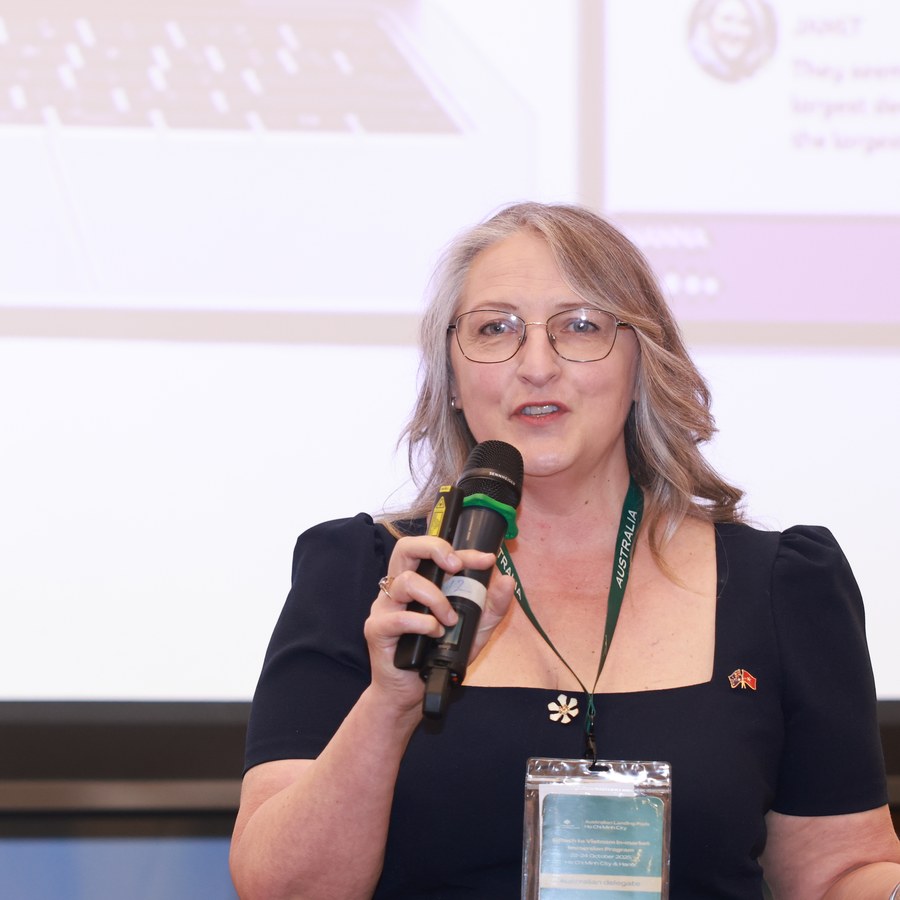
A former principal with 30 years in schools across the USA, Hong Kong and Australia. She advises school leaders on AI in education, with particular depth in AI agents within schools.